What Is Distance Education?
Distance education is a mode of learning where students study remotely instead of attending physical classes. Study materials, lectures, and assignments are delivered through print, online portals, or digital platforms, while exams may be conducted at designated centers. It allows students to learn at their own pace and schedule, making it ideal for working professionals, homemakers, and those living in remote areas who want to pursue higher education without geographical or time-based restrictions.
Types of Distance Learning
Distance learning is broadly classified into two types based on how interaction between teachers and students takes place.
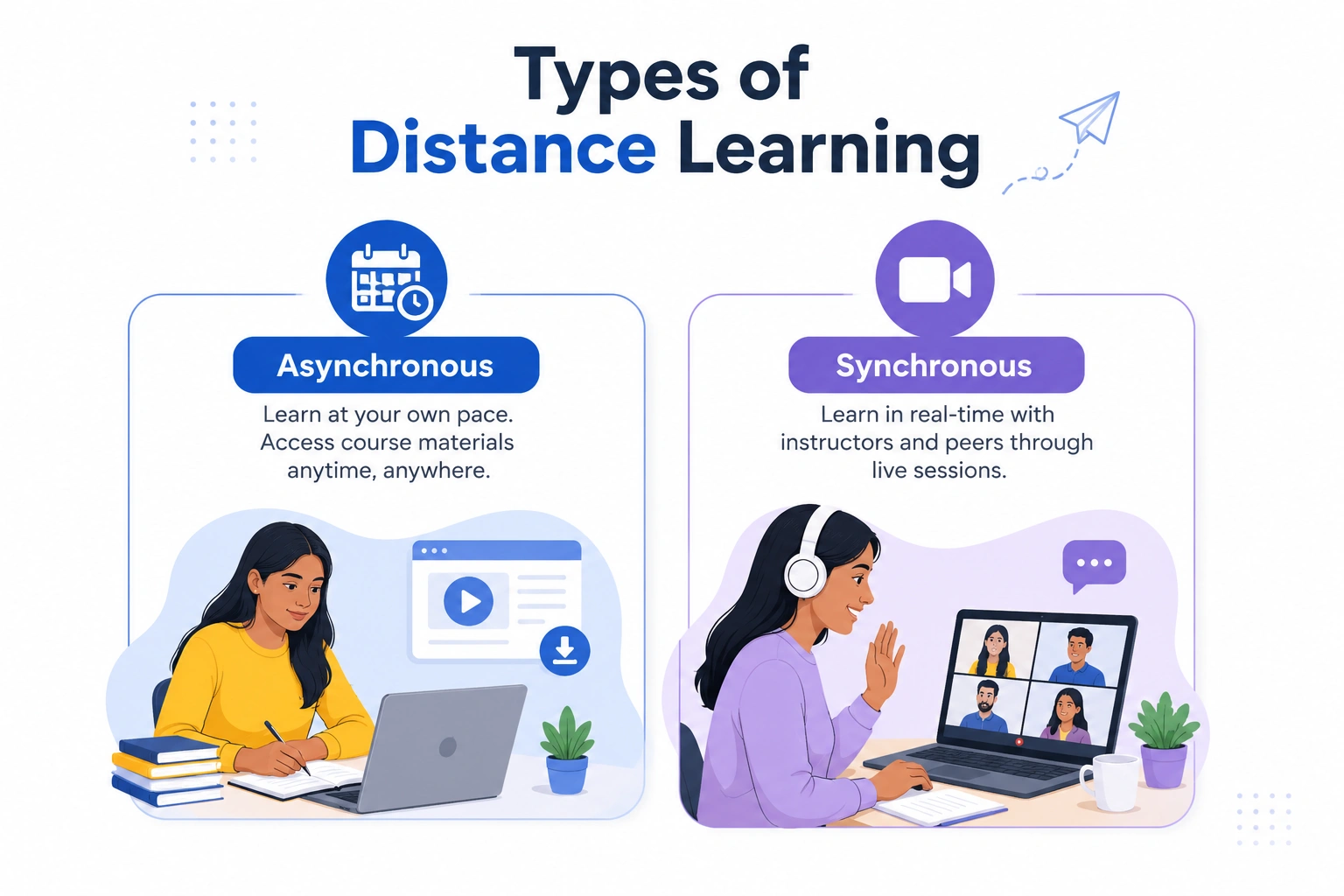 Asynchronous
Asynchronous learning lets students study independently without real-time instructor interaction, offering maximum flexibility and convenience.
- Access course materials, recorded lectures, and assignments anytime
- Study according to your own schedule and pace
- No fixed class timings required
- Ideal for working professionals balancing job and studies
- Allows systematic, comfortable completion of coursework
Synchronous
Synchronous learning involves real-time interaction between students and teachers through live classes, video conferencing, or webinars.
- Ask questions and participate in live discussions
- Receive immediate feedback from instructors
- Similar experience to a traditional classroom
- Requires presence at scheduled times
- Adds structure and a sense of community
Asynchronous vs Synchronous comparison table
| Feature | Asynchronous | Synchronous |
|---|---|---|
| Flexibility | High – study anytime, anywhere | Limited – fixed class timings |
| Interaction | No real-time interaction with teachers | Live interaction via video/webinars |
| Deadlines | Flexible, self-paced | Fixed schedules and class timings |
| Best Suited For | Working professionals, busy learners | Students wanting structure & engagement |
| Doubt Resolution | Delayed (via email/forums) | Immediate (live Q&A) |
Benefits of Distance Education
Distance education offers numerous advantages that make it a popular choice among diverse groups of learners across India.
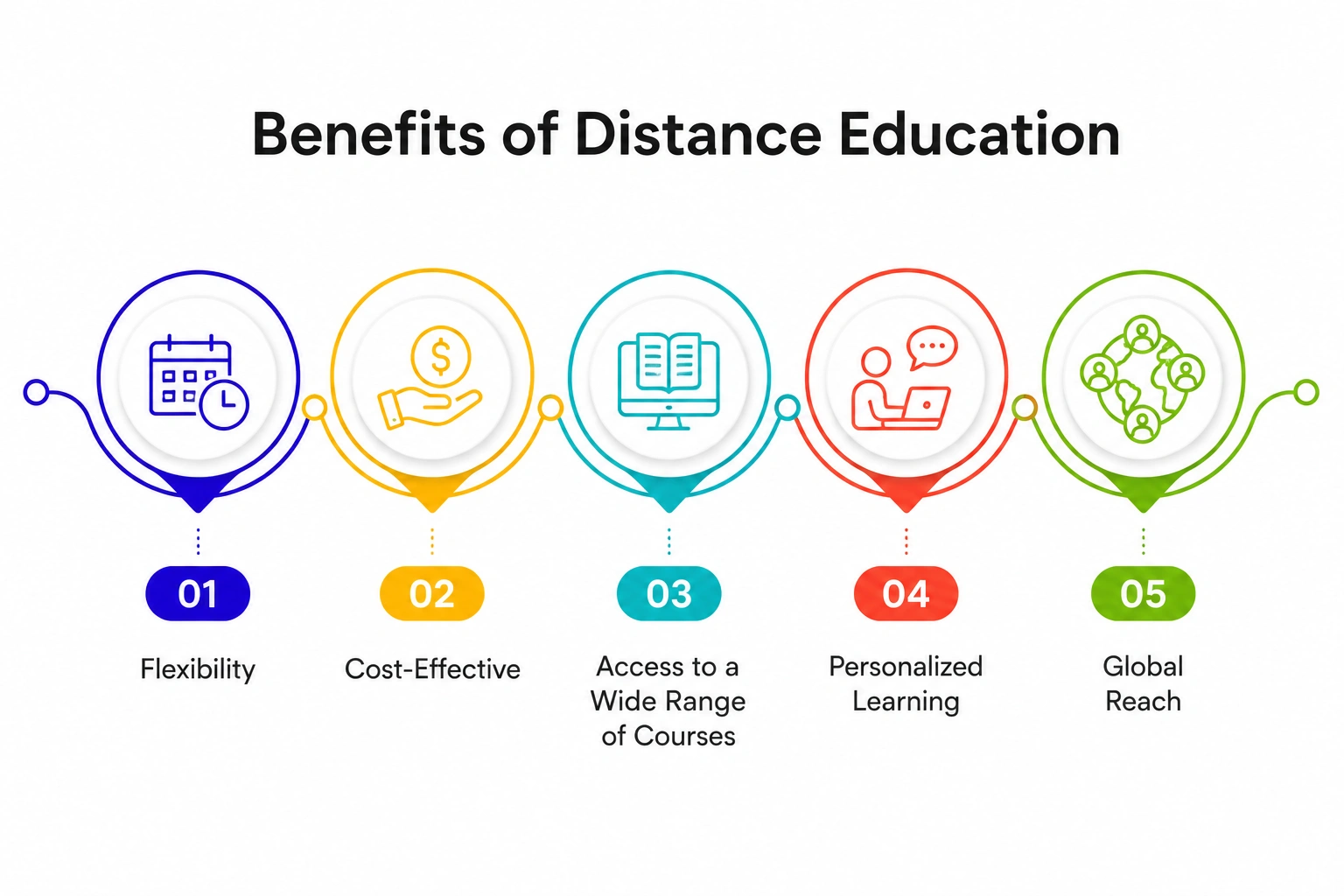
Flexibility
One of the biggest benefits of distance education is flexibility. Students can study at their own pace, choose convenient timings, and balance education with work or family responsibilities. There's no need to attend fixed classes daily, allowing learners to plan their study schedule around personal and professional commitments without compromising on either.
Cost-Effective
Distance education programs are generally more affordable than regular full-time courses. Students save on additional expenses like hostel fees, daily commuting, and campus-related costs. Tuition fees for distance learning programs are often lower, making higher education accessible to students from various economic backgrounds without compromising on the quality of degrees received.
Access to a Wide Range of Courses
Distance education opens doors to numerous courses and specializations that may not be available locally. Students can enroll in programs offered by universities across the country without relocating. This wide accessibility allows learners to choose courses aligned with their career goals, regardless of geographical limitations or the availability of such programs nearby.
Personalized Learning
Distance education allows students to learn according to their own understanding and pace. Those who need more time on certain topics can revisit materials, while faster learners can move ahead. This self-paced approach caters to individual learning styles, helping students grasp concepts thoroughly without the pressure of keeping up with a classroom group.
Global Reach
Distance education breaks geographical barriers, allowing students from remote towns, villages, or even other countries to access quality education from reputed institutions. Learners no longer need to relocate to study in a particular university, making it possible to gain recognized qualifications while staying connected to their home, family, and local responsibilities.
Different modes involved in distance learning
Distance learning is delivered through various modes, each designed to suit different learner preferences and accessibility needs.
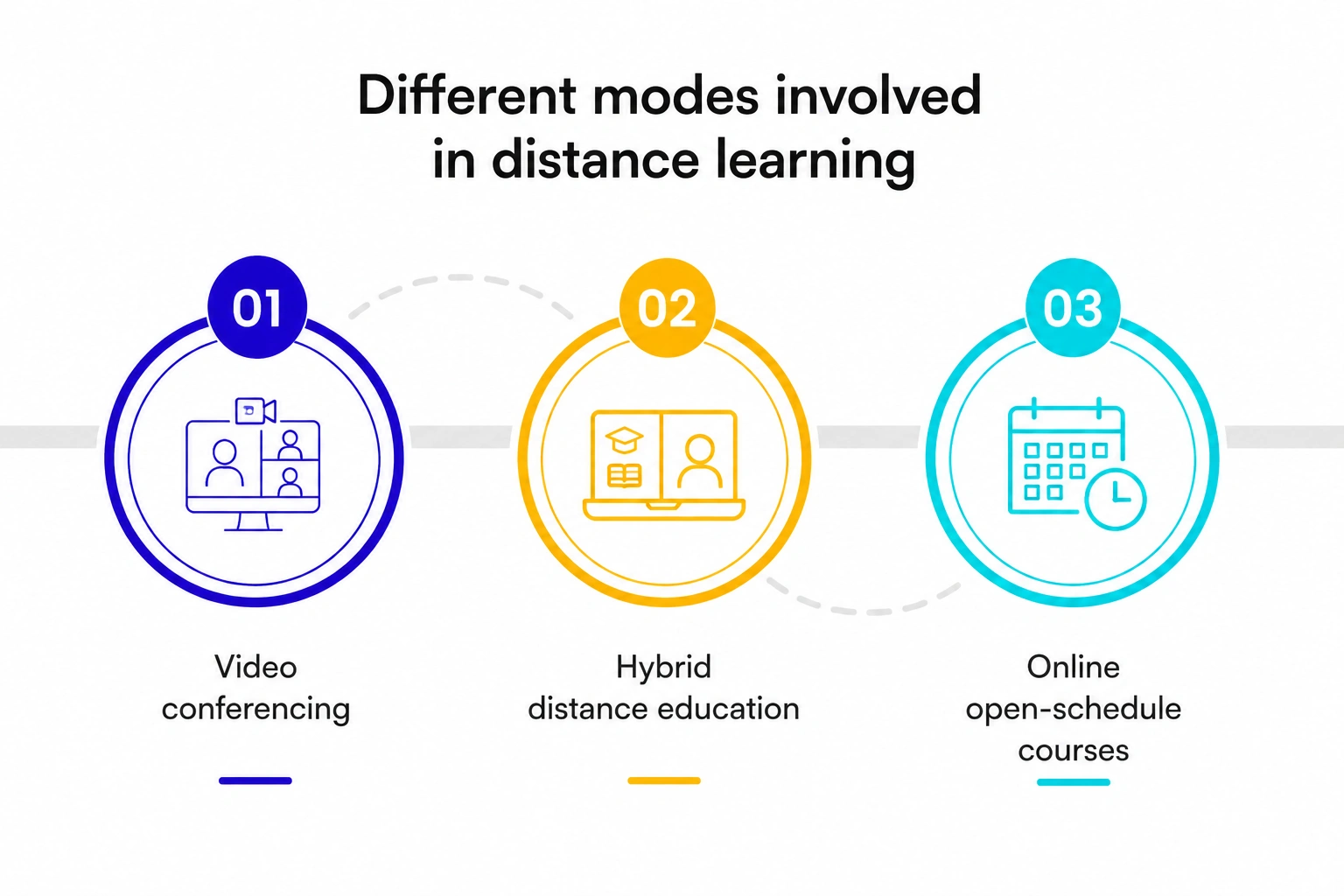 Video conferencing
Video conferencing enables live, face-to-face interaction between teachers and students despite physical distance. Platforms like Zoom or Google Meet are commonly used for lectures, doubt-clearing sessions, and group discussions. This mode adds a personal touch to distance education, helping students feel more connected and engaged compared to purely text-based learning materials.
Hybrid distance education
Hybrid distance education combines online learning with occasional in-person sessions, such as practical classes, workshops, or exams. This mode offers the best of both worlds—flexibility of remote study along with hands-on experience and direct interaction. It's particularly useful for technical or skill-based courses requiring practical demonstration and assessment.
Online open-schedule courses
Online open-schedule courses allow students to access study materials and complete coursework without fixed deadlines or timetables. Learners can start, pause, and resume courses as per their convenience. This mode is ideal for self-motivated students who prefer complete control over their learning journey and study timeline.
Challenges of Distance Learning
Despite its benefits, distance education comes with certain challenges:
- Lack of interaction – No face-to-face contact makes it hard to clarify doubts immediately, leading to feelings of isolation.
- Self-discipline required – Absence of fixed schedules demands strong time management, or procrastination can set in.
- Connectivity issues – Poor internet access, especially in rural areas, can hinder smooth learning.
- Perception gap – Some employers view distance degrees differently, though this is changing as UGC-recognized programs gain wider acceptance.
Who prefers distance education?
Distance education suits a wide range of learners:
- Working professionals – Looking to upgrade qualifications without leaving their jobs.
- Homemakers – Balancing family responsibilities with education goals.
- Remote area students – Lacking access to nearby colleges.
- Backup option seekers – Those who missed admission in regular programs.
- Competitive exam aspirants – Studying alongside exam preparation.
- Self-paced learners – Who prefer flexibility and independent study.
Conclusion
Distance education has emerged as a flexible, affordable, and accessible alternative to traditional learning, catering to diverse student needs. From working professionals to homemakers and remote learners, it offers opportunities for everyone to pursue higher education without major disruptions. While challenges like self-discipline and connectivity exist, the benefits clearly outweigh them, making distance education a smart choice for lifelong learning in today's digital age.